 Free UK delivery

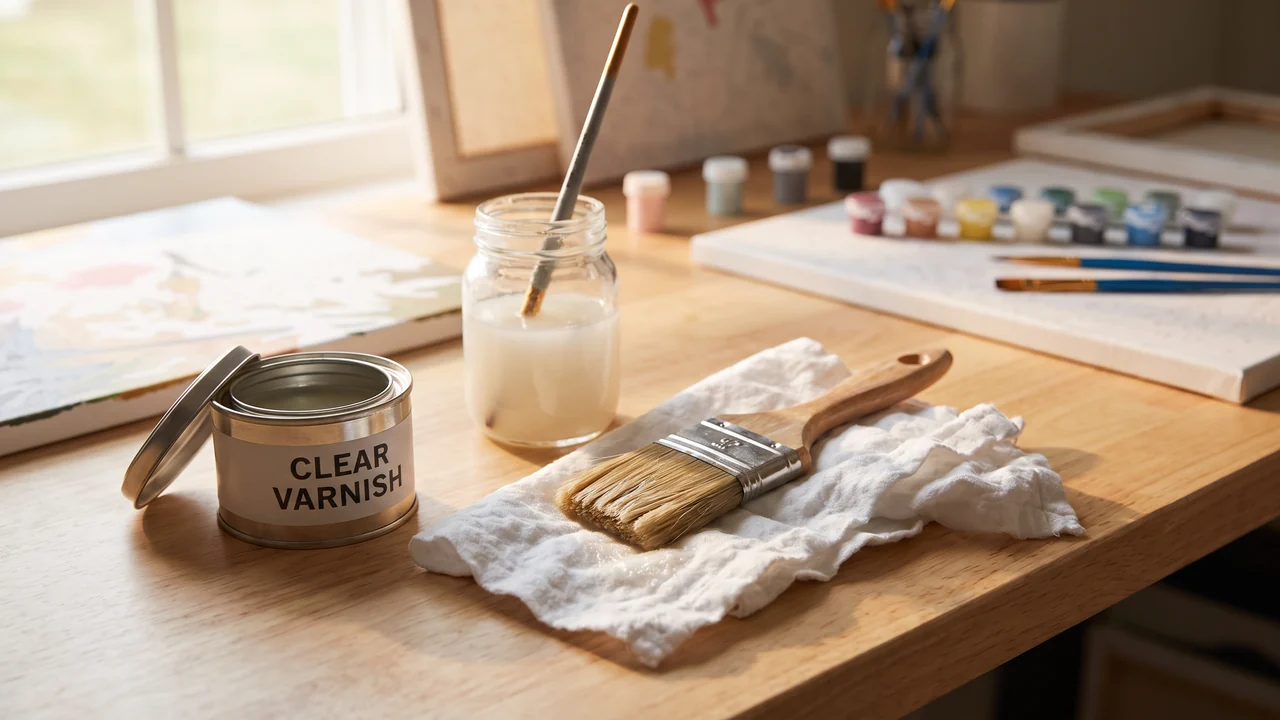
How to Clean a Varnish Paint Brush: Step-by-Step
Water will clean a water-based acrylic varnish brush, but an oil-based or polyurethane varnish needs white spirit or a brush cleaner. Check the tin first, since that decides everything else. Work quickly, because varnish can start to stiffen in the bristles surprisingly quickly once you put the brush down, and how to clean a varnish paint brush properly starts with matching the cleaner to the product.
This guide is for anyone who has just finished varnishing a canvas, a finished paint-by-numbers kit or a piece of furniture and finds the bristles drying. It covers the cleaning steps in order, what to do with a brush that has already gone stiff, how natural and synthetic bristles differ, and how to dry and store the brush so it is soft and usable next time.
In short
- Water-based varnish cleans with warm soapy water; oil-based varnish needs white spirit or brush cleaner.
- Clean immediately after use and never let varnish dry in the ferrule.
- Work solvent through the bristles, then wash with soap, rinse and reshape.
- A stiff natural-bristle brush can often be revived with a long solvent soak and a bristle comb (avoid long soaks for synthetic brushes).
Can you clean a varnish brush with water?
Water cleans a varnish brush only when the varnish is water-based. For those, warm water and a few drops of washing-up liquid will lift it, as long as you start before it dries. Oil-based varnish and polyurethane do not dissolve in water, so they need white spirit or a dedicated brush cleaner.
Check the tin label first. It will say "water-based" or "clean brushes with water" somewhere on the label, or "clean brushes with white spirit" if it is solvent-based. If the label has worn away, brush a small drop onto a scrap of card or an offcut and run a little water over it straight away. Water-based varnish smears and turns milky, while oil-based varnish stays glossy and the water beads on top of it.
The wrong liquid makes the job harder. Water pushed into a brush loaded with oil-based varnish only wets the outside of the bristles, leaving the varnish trapped near the ferrule, where it dries into a stiff lump. If you have no cleaner to hand, wrap the brush tightly in cling film to slow the drying until you do. A brush comb or a spare jar from our paint by numbers accessories also helps once you start cleaning.
What you need before you start
Everything here is ordinary kit you can put on one tray before the brush starts to stiffen.
- A solvent matched to the varnish: white spirit for oil-based and polyurethane varnish, or plain warm water for water-based varnish.
- Two small glass jars, so you can rinse in one and keep clean solvent in the other.
- Warm water with a little mild washing-up liquid for the final wash, which removes the solvent smell and any oily film.
- Paper towels or old rags for wiping off the bulk of the varnish before any liquid touches the bristles.
- A brush comb or an old fork to separate clumped hairs near the ferrule, where varnish tends to collect.
- A bar of mild soap for massaging the bristles into a lather once the solvent is gone.
- Rubber gloves, and a room with an open window, since white spirit gives off fumes and dries skin.
If your brushes came with a kit, you can find spare brushes and other extras among our paint by numbers accessories.
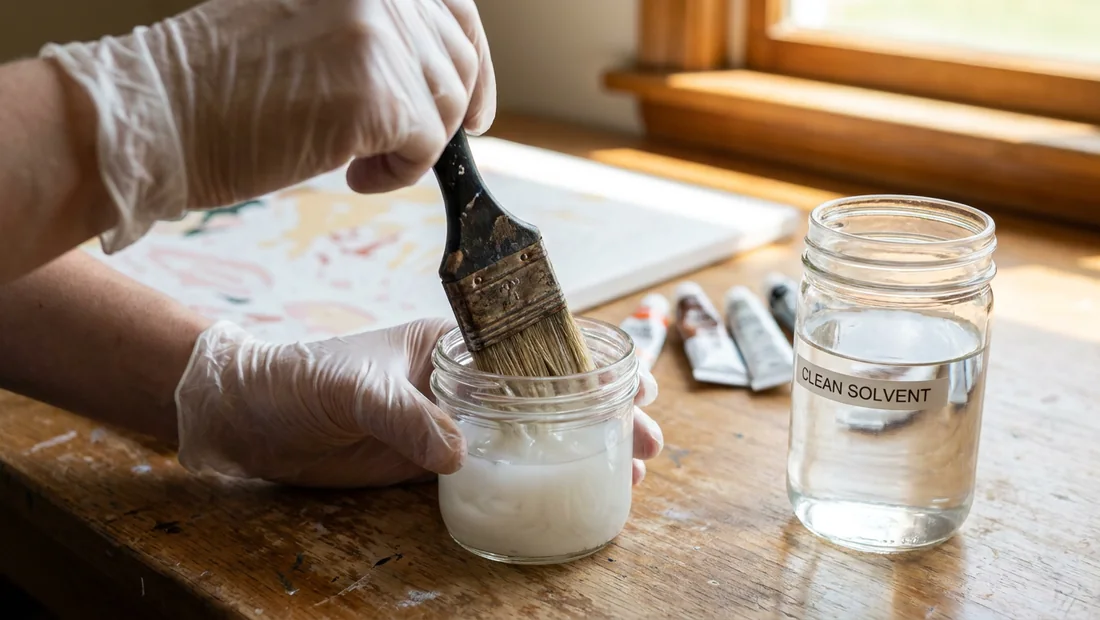
How to clean a varnish brush, step by step
A brush still wet with varnish can be cleaned in six steps, and the solvent you use depends on the varnish: water for water-based, white spirit for oil-based and polyurethane. Work in a ventilated room and start while the varnish is still wet.
Wipe off the excess
First, draw the brush along the edge of a jar, then press and stroke it on a clean rag or kitchen paper, working from the ferrule towards the tips. Keep going until very little colour or sheen transfers to the cloth. The more you remove now, the less solvent you will need.
Work solvent through the bristles
Pour about 2 cm of solvent into a jar. Swirl the brush, then press the bristles lightly against the side of the jar so the solvent reaches the base of the hairs. Avoid hard pressing on the bottom, as this bends the tips.
Repeat with fresh solvent
Then wipe the brush on the rag again, tip the dirty solvent into a separate sealed container and pour in fresh solvent. Repeat until the solvent stays clear after a swirl. Most brushes need two or three rounds.
Wash with warm soapy water
Solvent left in the bristles keeps them tacky. Add a little washing-up liquid to your palm, work the brush in small circles, and keep going until the water stays clean and the lather is thick and white.
Rinse and reshape
Rinse under lukewarm running water with the bristles pointing down, so water does not run into the ferrule. Squeeze out moisture with a cloth, then comb the bristles straight with your fingers or a brush comb and shape the tip.
Dry flat or bristles-up
Lay the brush flat on a towel, or stand it handle-down in a jar with the bristles clear of the sides. Never rest it on its bristles, because they set in a bend. Our paint-by-number accessories include brush sets if you want a separate brush for varnish.
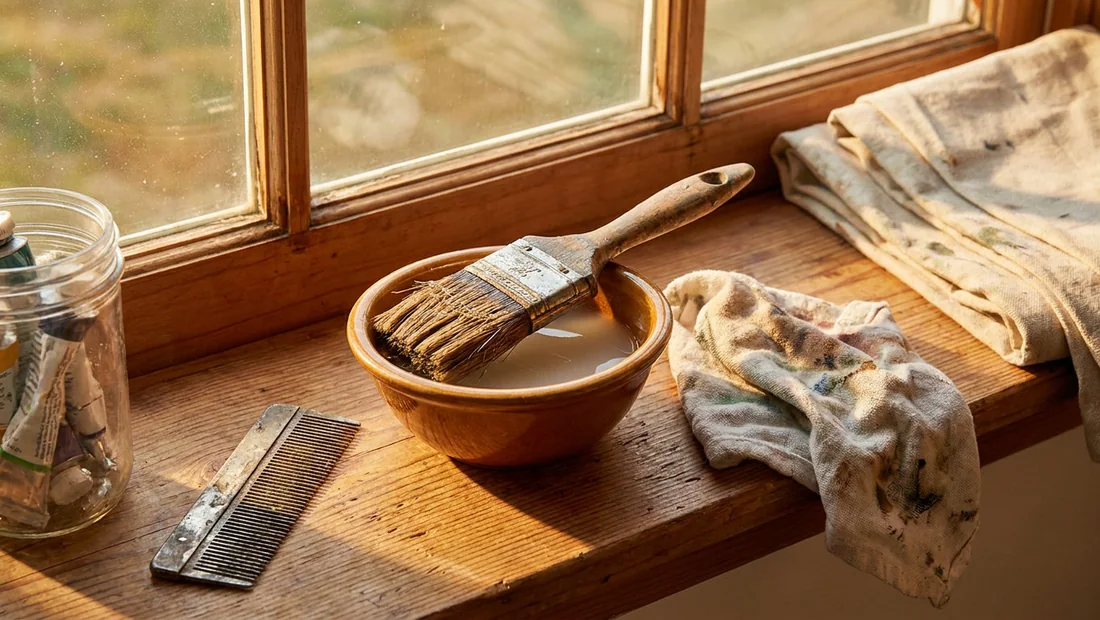
How to clean varnish off a brush that has already hardened
A brush that has gone stiff can often be saved if the varnish has not set right through the heart of the bristles. Use the solvent that matches the varnish: white spirit or brush cleaner for oil-based and polyurethane, and warm soapy water for water-based residue, with methylated spirits only if the manufacturer's label allows it.
Soak the bristles only
pour about 3 cm of solvent into a glass jar and stand the brush in it so the bristles are covered but the metal ferrule stays dry. Hang it from a clip or a strip of tape across the jar rim if needed. Leave it for several hours, or overnight for a badly hardened brush.
Comb the bristles gently
lift the brush out and work a fine metal brush comb from the ferrule towards the tips. Short, light strokes loosen the softened varnish. Pulling hard on the bristles tears them out, so stop if they resist.
Repeat the soak if needed
Swap in fresh solvent, as the old liquid is already loaded with varnish, and soak again for a few hours. Two rounds are usually enough for a brush left overnight.
Wash and reshape
Rinse off the solvent with warm water and washing-up liquid, massaging the lather into your palm until the water runs clear. Squeeze out the water, smooth the bristles into their original point and leave the brush to dry flat.
Decide when to replace it
If the bristles stay rigid after two soaks, or they splay and shed, the brush is finished. A fresh brush is not expensive, so replacing it is often the simplest option. Our paint by number accessories include replacements.
Natural bristle versus synthetic: does it change the cleaning?
Yes, the bristle type changes how you wash a brush, though the steps stay the same. Natural bristle, usually hog hair, suits oil-based varnish and copes well with white spirit. It soaks up water, so it can swell and splay if you leave it in a water-based rinse for long.
Synthetic filaments, usually nylon or polyester, suit water-based varnish and need gentler handling. Harsh solvents can soften and curl them, so reserve white spirit for brushes used with oil-based products. Rub the bristles lightly between your fingers with lukewarm water and a little mild soap, rather than scrubbing them against the bottom of the jar.
On either type, avoid very hot water, which can loosen the glue in the ferrule, and avoid bleach or harsh household cleaners, which dry out the bristles. With natural bristle, run a fine comb through the hairs while they are still damp, then shape the tip with your fingers. Our paint by number accessories include brushes if you want a dedicated one for varnish.
Drying and storing a varnish brush so it is ready next time
Once the brush is clean, squeeze out surplus water or solvent with a clean cloth, reshape the bristles with your fingers and lay it flat on a towel, or hang it by the handle hole with the bristles pointing down. Standing a damp brush on its bristles bends the tips and pushes moisture up into the ferrule, which is where mustiness and loose hairs begin.
When the bristles are fully dry, which usually takes a day, slip the brush back into its original paper or plastic sleeve. If you no longer have one, wrap the head loosely in a strip of kitchen paper or brown paper and secure it with a rubber band, not too tight. This holds the shape without crushing the tips.
Keep brushes in a drawer or box away from direct sun and damp, since sunlight makes natural bristles brittle and a humid shed encourages mildew. A quick rinse straight after each varnish session takes a couple of minutes and saves a long soak later. If you keep your brushes, palettes and other kit together, our paint by numbers accessories may help you organise them.

Varnishing a finished paint-by-numbers canvas
Once the last numbered area is filled, leave the canvas for at least 24 hours before you varnish, longer if you have painted thick patches of colour. Acrylic can feel dry on top while the layer beneath is still soft, and varnish brushed over it can drag the paint or turn it cloudy. To check, press a fingertip lightly on a dark area in a corner: it should feel dry and not tacky.
Choose a varnish made for acrylic, in gloss, satin or matt depending on the finish you want, and brush on thin coats with a clean, soft brush, letting each one dry before the next. Two thin coats usually look more even than one heavy one. Clean the brush straight away with the method above, matched to the varnish you used, so it is soft and ready when you open your next kit from our paint by numbers for adults collection, perhaps the Highland cow in a misty loch.
A varnished canvas in a frame makes a considered gift. If you would like to give one made from a favourite photo, our custom paint by numbers kits are made to order, so they are excluded from the 14-day cancellation right. Please check the photo carefully before you order.
Our picks


The most useful habit is to clean the brush straight after the last stroke, before varnish can dry inside the ferrule, using warm soapy water for water-based varnish and white spirit for oil-based. Work the cleaner through the bristles, wash with soap, rinse until the water runs clear, then reshape and hang the brush to dry. If you are looking for a new project to put a clean brush to use, our paint by numbers kits for adults are a good place to start.
Ready for your next canvas?
Browse our adult paint-by-numbers kits, or turn a favourite photo into a personalised kit. Free delivery by post to the UK and Ireland, dispatched within 48 hours.
View Paint by Numbers for AdultsFrequently asked questions
Can you clean a varnish brush with water?
Only if the varnish is water-based. Warm water and a little washing-up liquid will lift it while it is still wet. Oil-based varnish and solvent-based polyurethane do not dissolve in water, so they need white spirit or a proper brush cleaner first, followed by a soapy wash to remove the solvent.
What is the best way to clean a varnish brush?
Wipe off the excess on the rim of the tin or on newspaper, then work the matching solvent through the bristles: water for water-based, white spirit for oil-based. Wash in warm soapy water, rinse until it runs clear, comb the bristles straight and leave the brush to dry flat.
How do you clean varnish off a hardened brush?
Stand the brush in a jar with enough solvent to cover the bristles only, keeping the ferrule and handle clear. Leave it for several hours, then comb gently to loosen the softened varnish. Repeat if the bristles are still stiff, then wash with warm soapy water and reshape the bristles.
Can I use white spirit on a synthetic brush?
Brief contact is usually fine, and many synthetic brushes are designed for use with oil-based varnish. Rinse the white spirit out promptly with washing-up liquid and warm water. Avoid very hot water and long soaks, as both can soften or bend synthetic filaments.
Should I clean a varnish brush after every use?
Yes. Varnish sets hard where the bristles meet the ferrule, and that part is the hardest to rescue later. A couple of minutes of cleaning at the end of a session helps keep the brush soft and the edge in good shape. If you are applying a second coat within hours, wrap the brush in cling film instead.
Related posts
 How to Mount Canvas on Wall: 5 Secure Ways to Hang It
 Paint by Numbers with Paint Pens: What to Buy
 Craft Lamp: How to Light Your Paint by Numbers Desk