 Free UK delivery

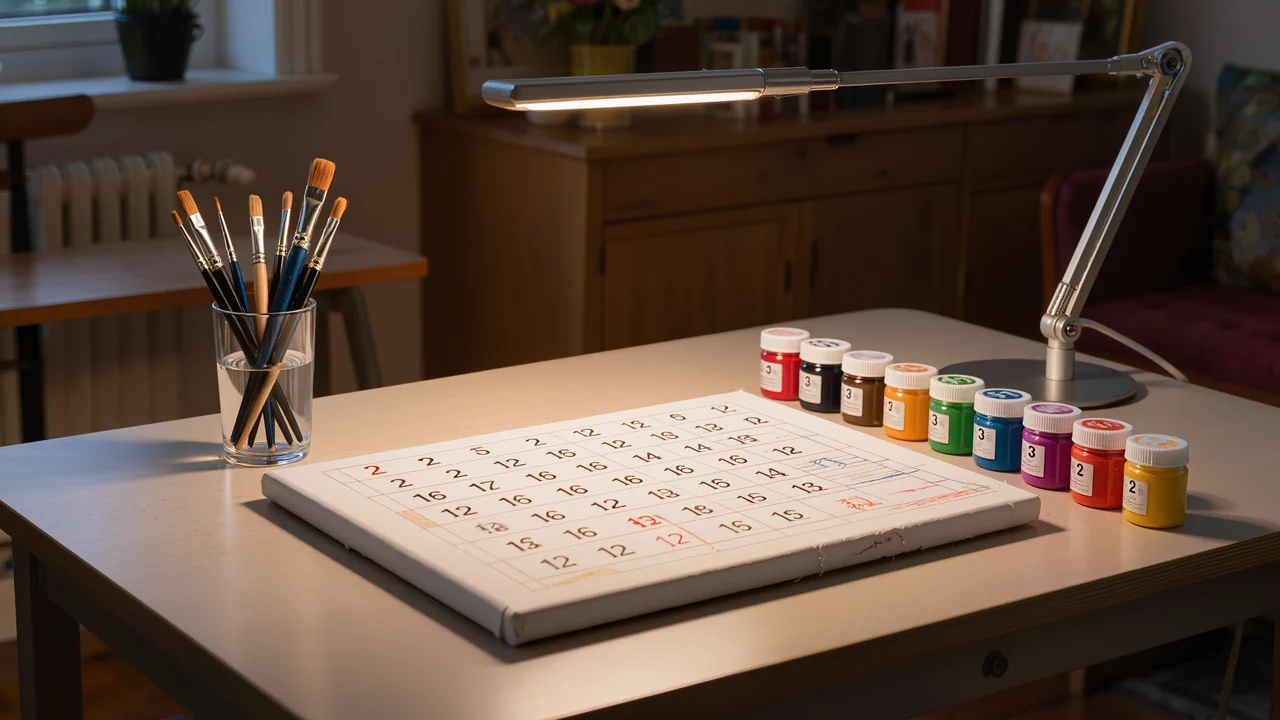
Craft Lamp: How to Light Your Paint by Numbers Desk
A craft lamp is useful for paint by numbers when evening light makes small numbers hard to read, although a bright, evenly lit desk can work well without one. The right lamp gives steady, shadow-free light, helps you judge paint colours more accurately and reduces the need to lean close to the canvas.
This guide is for beginners, regular painters and anyone choosing a gift, including a personalised kit made from a photo. It helps you compare brightness, colour temperature, magnification and adjustable arms, then position the light on a small desk, shared table or sofa. You will also find practical habits for clearer numbers, better colour checks in daylight and a tidier painting session from first brushstroke to finished canvas.
In short
- A craft lamp for paint by numbers needs even, adjustable light and a position that avoids glare on the canvas.
- Daylight-balanced light helps you judge colour; a magnifier helps with small numbered areas but is not essential.
- Set the lamp to the side of your dominant hand and slightly above the canvas to reduce shadow and reflection.
- A simple, well-placed lamp plus a tidy kit is often enough; buy the lamp that fits your desk, not the most complex one.
What is a craft lamp, and do you need one for paint by numbers?
A craft lamp is an adjustable task light for close work, and it can make painting by numbers easier without being essential for every canvas. It is designed for activities such as painting, sewing and model making, where you need to see small printed details at a comfortable distance.
For a numbered canvas, extra light helps you read faint or small numbers, keep paint inside narrow sections and judge colour more consistently. This is especially useful in the evening, when a ceiling light may leave your desk in shadow. A well-placed lamp can also make close work feel more comfortable by reducing the need to squint or lean over the canvas. Your usual room lighting may be enough for a large, simple design, particularly beside a bright window during the day. You do not need a separate lamp if you can read the numbers clearly and see the paint without shadows or glare.
When choosing one, look for an adjustable arm so the light can reach the centre and edges of the canvas. An even beam is more useful than a harsh spot, as it keeps the working area consistently lit. Choose a stable base if the lamp will sit beside your paints, or a clamp if desk space is limited. A suitable paint by numbers accessory should support your working position rather than force you to move the canvas repeatedly. With the right light, your paint by numbers kit for adults is easier to use at the time of day that suits you.
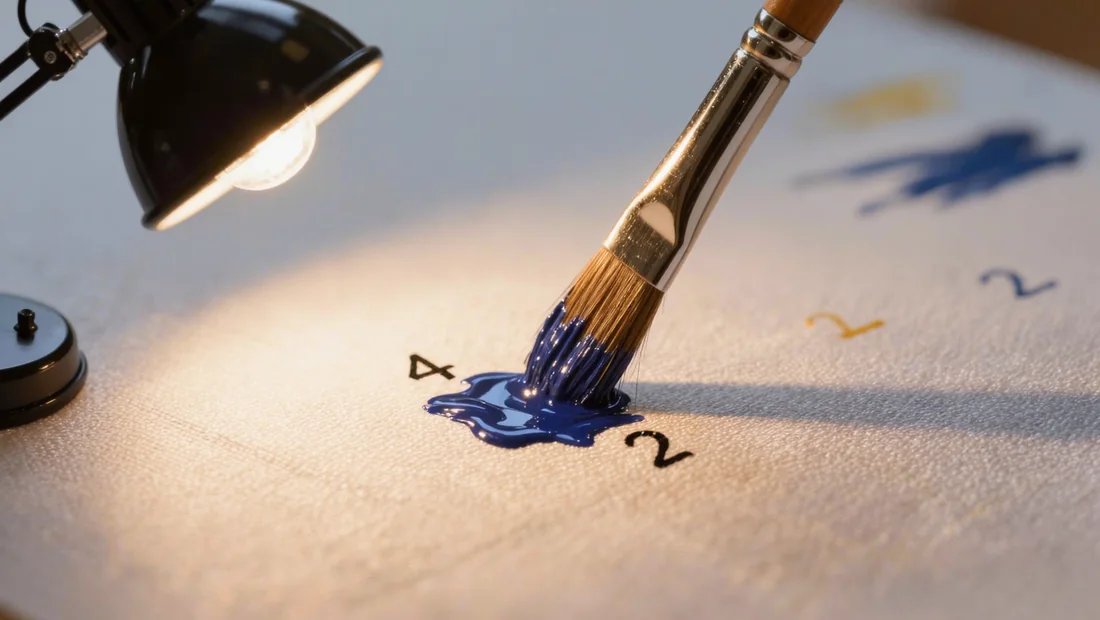
Which craft lamp features actually matter for painting by numbers?
The right lamp for paint by numbers gives you even, colour-consistent light across the canvas and enough control to work closely without glare.
- Choose a lamp that spreads light across the whole canvas, since a bright hot spot can leave the edges too dark and make small numbers harder to see.
- Look for a flicker-free LED light, particularly if you paint for long evening sessions, and check that the diffuser produces a steady, even glow.
- A daylight-balanced setting helps you judge paint colours more reliably; warm yellow light can make blues and greys appear different from how they look in daylight.
- An adjustable arm and lamp head let you place the light over the canvas and angle it down, rather than directing glare towards your eyes.
- A built-in magnifier can help with tiny numbered areas and narrow shapes, although it reduces the part of the canvas you can see at once and is optional for beginners.
- A clamp model for a small desk saves working space and keeps the base away from your paints, while a lamp with a weighted base is easier to move between a desk, table and sofa.
- A dimmer is useful when the room becomes darker during a long session, as you can lower the brightness when the canvas is clear and increase it for detailed sections.
- An ordinary on/off lamp still works well when it gives steady, even light and can be positioned safely beside the canvas, so you do not need every extra feature.
- Keep your lamp choice practical alongside other paint by numbers accessories, especially if you need space for paint pots, brushes and a water cup.
How to set up your craft lamp for a paint by numbers session
Set up your craft lamp so the canvas is evenly lit from the opposite side to your dominant hand, with the light falling across the numbered surface rather than into your eyes.
Clear the desk
Remove spare materials and place the canvas flat, or raise it to a slight easel angle. Keep the painting area steady and close enough for you to read the numbers without leaning forward.
Place the lamp opposite your hand
Put the lamp on the left if you paint with your right hand, or on the right if you paint with your left. Position the head slightly above and in front of the canvas so your hand does not cast a shadow over the section you are filling.
Angle the light across the canvas
Tilt the lamp head until the light spreads across the numbered area. Look for bright reflections on the glossy canvas or wet paint. If you see glare, move or angle the lamp rather than shifting your head around the reflection.
Move the lamp for each section
Keep the light close enough to show faint numbers, then reposition it as you work across the canvas. A small adjustment can make pale outlines easier to see and reduce shadows from your hand and brush.
Keep paint pots out of the beam
Place open pots beside the canvas, outside the strongest part of the light. Direct heat from some lamps can make paint skin over faster, so close each pot between uses and keep the lids nearby.
Test a small numbered area
Paint a small section first and check that you can read the number, see the colour clearly and work without glare. Make these adjustments before starting a long session, alongside your paint by numbers accessories.
Craft lamp or daylight? Matching your light to the time of day
Daylight gives you the clearest reference for judging paint colour, so use it whenever you can, especially before deciding that a painted area needs correcting. Natural light shows the canvas and acrylic paint in a familiar colour balance, while evening lamps can make the same shade appear warmer, cooler or darker.
When you paint after sunset, choose a daylight-balanced craft lamp to get closer to the colours you saw during the day. Keep the lighting around the canvas consistent: strong warm room light beside a cool lamp placed directly above can create two different colour impressions at once. Switch off a nearby amber-toned lamp, or move it away from the work area, so your eyes are judging the canvas under one main light source.
If a colour looks wrong, pause before repainting it. Put the canvas near a window in daytime, then compare the painted section with the numbered paint pot. A simple test patch helps too: apply a little paint to an unused area or a spare piece of paper, and view it under both daylight and your evening lamp. This small check can prevent an unnecessary second coat. The same approach is useful when choosing paint by numbers for adults or arranging paint by numbers accessories for sessions at different times of day.
Beyond the lamp: small habits that make numbers easier to read
Working from the top of the canvas downwards keeps numbered areas clear and saves you from leaning closer.
- Let each painted section dry before your hand rests near it, so you are not tempted to hover over wet paint.
- Prop the reference picture beside the canvas and keep both in the same light, so the printed colours are easier to compare with the paint.
- Choose a finer brush for small numbered areas instead of bringing your face closer to the canvas; a pointed tip gives you more control around narrow shapes.
- Pause during longer sessions and look across the room for a short while before returning to the details, as tired eyes can make faint numbers harder to read.
- Keep the canvas flat, or use a board that holds it steady, so you can move your head and the light into a comfortable position rather than bending over the work.
- Brush away loose dust gently with a clean, dry, soft brush, since dirt and dried paint can make printed numbers look blurred or covered.
- Keep paint pots closed when you are not using them and wipe stray paint from the brush handle, table and canvas edge to prevent marks around unpainted numbers.
- A few useful tools from our Paint by Numbers Accessories collection, such as a brush set or stand, can help you maintain a clear, stable working position.
Choosing a kit to go with your new lamp
Choose a kit that matches the space your craft lamp can cover comfortably. If you are starting your first canvas, a simpler design with larger numbered areas gives you room to learn how to position the light and keep colour inside each section. Our paint by numbers kits for beginners are a practical place to start, while a smaller canvas can suit a compact desk or shared table.
Regular painters may prefer a larger canvas, especially when the lamp has a wide, even spread of light. Check that the whole working area stays illuminated as you move across the picture, rather than leaving the far edge in grey shadow. Paint by Numbers UK offers 12 canvas sizes, with an optional frame, so you can match the project to your desk and storage space. For a meaningful gift, a photo can be turned into a personalised paint by numbers kit, and the recipient can then work from a familiar image under their new lamp. Personalised kits are excluded from the 14-day cancellation right.
Each kit includes a pre-printed numbered canvas, numbered acrylic paints and brushes. Orders are dispatched within 48 hours, with free delivery by post to the UK and Ireland. Payment is available by card or Apple Pay, and every kit has a one-year guarantee alongside your rights under the Consumer Rights Act. Keep the product page open while choosing the canvas size, then check that your lamp gives enough clear light for the areas you plan to paint first.
Our picks


The most useful adjustment is to place your lamp slightly above the canvas and to the side of your dominant hand, then tilt it until the numbers are clear without glare or hand shadows. Choose even, adjustable, daylight-balanced light; add a magnifier only if small sections are difficult to see. Keep the kit tidy and match the light to your desk. See our Paint by Numbers for Adults collection for a suitable set-up.
Set up your desk and start a canvas
Choose a kit that suits your space and light. Free delivery by post to the UK and Ireland, dispatch within 48 hours, payment by card or Apple Pay, and a 1-year guarantee.
View Paint by Numbers for AdultsFrequently asked questions
Do I need a magnifier on my craft lamp for paint by numbers?
No, a magnifier is not essential for most paint by numbers projects. It can help with very small numbered areas, although the enlarged view narrows what you can see around the brush. Good, even lighting and a fine brush usually make detailed sections easier to manage. Choose a magnifier if your canvas regularly includes tiny sections.
What colour light is best for painting by numbers?
Daylight-balanced light is best for judging paint colours accurately. Strong warm light can make blues and greys appear different from their actual shades, which may lead to the wrong colour being used. If a colour looks doubtful, place the canvas near a window in daylight and compare it before continuing.
Where should I put the lamp to avoid glare on the canvas?
Place the lamp opposite your dominant hand, slightly above and in front of you, with the light angled across the canvas. This helps keep your hand from casting a shadow over the area you are painting. If you see a reflection, move the lamp rather than your head until the surface looks evenly lit.
Can I use a craft lamp with a personalised paint by numbers kit?
Yes, a craft lamp works in the same way with a personalised paint by numbers kit. Even lighting helps you read the small numbers and follow the outlines on a photo-based canvas. Please note that personalised kits are excluded from the 14-day cancellation right, so check the product terms before ordering.
Do you sell craft lamps?
We sell paint by numbers kits and accessories rather than lamps. Our lighting guidance can help you choose a suitable lamp from another retailer, with even daylight-balanced illumination and an adjustable position. A well-lit desk makes it easier to read canvas numbers, separate similar colours and keep brushwork inside each numbered section.