 Free UK delivery

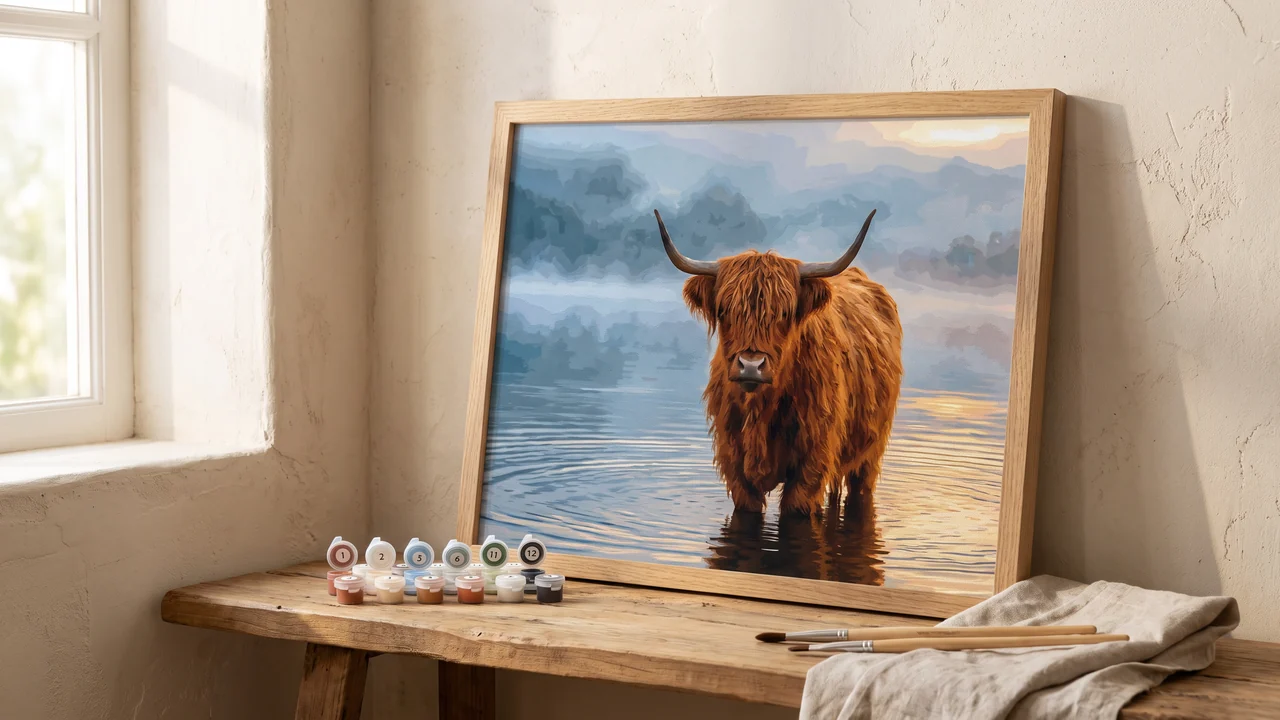
Best Painting by Numbers: A UK Buyer's Guide
The best painting by numbers kit has a pre-printed canvas with clear, crisp lines, acrylic paints that arrive sealed and still wet, and at least three brushes in different sizes. Canvas size and design complexity matter more than the brand name on the box, and a personalised kit is worth it only when the photo is sharp and simple.
This guide is for UK adults buying a first kit for themselves, and for anyone choosing a gift who finds it hard to tell one listing from the next. It helps you pick a canvas size that fits the time you have to spare, spot which paints and extras are worth paying for, and decide whether a kit made from your own photo suits you. You will also find a simple way to get started, plus advice on finishing and framing.
In short
- The best painting by numbers kit is the one that matches your space, eyesight and patience: a 40x50cm canvas is a good starting point for most adults, while 60x80cm suits confident painters with more time.
- Check that the canvas is pre-printed with clear, legible numbers and that paints are numbered to match. This matters more than anything else for how much you enjoy the kit.
- Brushes in most kits are serviceable, but a small detail brush and a flat brush make fine edges and large areas much easier.
- Personalised photo kits are a genuine option for gifts, but they are excluded from the 14-day cancellation right, so choose the photo carefully.
What makes the best painting by numbers kit for adults?
A good kit for adults has a clearly printed canvas, paints that cover properly, and brushes that suit the detail, so check these before you look at the picture.
- The canvas should arrive pre-printed with numbers you can read at arm's length and thin, unbroken lines between sections, because faint or crowded numbers are the most common cause of frustration with cheaper kits.
- The acrylic paints should be numbered to match the canvas, and each pot should hold enough to give two coats on lighter colours such as white, cream and pale blue, where one coat usually looks patchy over a dark printed number.
- Look for at least one fine detail brush and one flat brush in the box, since a single medium round brush makes both small areas and large skies harder than they need to be.
- Canvas size decides how the painting feels: smaller canvases finish in fewer sittings, while larger ones carry finer detail and many more sections, so choose according to how much time you want to spend and how much eye strain you can handle.
- A frame and hanging hardware are optional extras, and it helps to know before you order whether they are included or sold separately.
- A one-year guarantee, alongside your rights under the Consumer Rights Act, gives some reassurance if something arrives faulty, though it does not replace checking the kit description carefully.
Our page on paint by numbers for adults shows kits built to this checklist, and our accessories range covers anything you want to add later.
How to choose your canvas size and design
Choose the size first, because it decides how long the painting takes and how much detail you'll need to fill in. Most adults settle on a medium canvas, as it gives a comfortable evening or two of work per section without the numbered areas becoming too fiddly to fill. Whatever the size, pick a subject you would happily look at for several weeks: a landscape with broad skies is forgiving of a slow, steady pace, while an animal portrait needs more patience around eyes and fur.
| Size | Best suited to | Detail to expect | Where it hangs |
|---|---|---|---|
| Small | Quick evenings, a first try, a small gift | Larger shapes and few colours, so mistakes are easy to correct | Shelf, desk or a narrow wall, usually fine unframed |
| Medium | The usual choice for adults and beginners | Moderate detail, manageable with a size 0 or 2 brush | Above a chair or sideboard, a frame lifts it |
| Large | A statement piece over several weeks | Many small areas, so good light and sharp eyesight help | Over a sofa or bed, framing is worth planning for |
| Personalised photo kit | A gift or a keepsake | Depends on the photo: clear faces and plain backgrounds give cleaner painted results | Choose the size and frame when ordering, as personalised kits often cannot be cancelled once production has started |

Brushes, paints and accessories worth adding
A fine detail brush is one of the most useful extras. Numbered areas on a busy design can be only a few millimetres wide, and a brush with a short, pointed tip lets you fill them without touching the neighbouring line. A small flat brush, around 10 to 12 mm, suits the opposite problem: large sky or background sections are covered in a few strokes, with fewer visible streaks than a round brush tends to leave.
Brushes keep their shape if you rinse them in clean water as soon as you finish, blot the bristles on a cloth, and lay them flat or stand them bristles up to dry. Leaving them in the water pot bends the tips after a single session, and dried acrylic is very hard to remove from the bristles afterwards. A lint-free cloth beside the water pot also helps, because a damp brush deposits less paint at the edge of an area than a wet one.
Small lidded pots are useful if you want to mix a colour or keep a paint from drying out between evenings. Most kits supply enough brushes and paint to finish the picture, though it is worth checking, so buy separately when the tip frays, when you want a finer point for a detailed design, or when you are painting regularly. You'll find these replacements in our paint by numbers accessories range.
How to start painting by numbers: a calm first session
A first session goes best when you set aside about two hours, expect to cover only a few colours, and stop when your eyes tire. Here are six steps to follow.
Set up in good light
Choose a table by a window, or use a daylight lamp, so the small numbers stay easy to read. Lay the canvas flat, or prop it at a slight angle if your neck starts to ache after twenty minutes.
Keep the reference picture in view
Stand the printed guide beside you. When a patch of numbers is hard to decipher, the finished image tells you what the area is meant to become.
Start with one colour, the largest areas first
Open a single pot and fill every space with that number before moving on. Big areas such as sky or background let you get a feel for the paint without wrestling with tiny shapes.
Apply thin coats and let them dry
Load the brush lightly and work the paint across the canvas. A thin layer dries in a few minutes, and a second coat covers any darker number beneath it. A thick blob dries slowly and can leave ridges.
Rinse and dry the brush between colours
Wash in clean water, then blot the bristles on a paper towel. A damp brush dilutes the next colour and makes coverage patchy. Push the lids firmly back on your pots as you finish each colour so the paint stays workable.
Leave the canvas to dry fully
Once the last number is filled, rest the painting flat for at least 24 hours before framing or varnishing. If you are painting with a child or a complete beginner, our guide to painting by numbers for kids and beginners has more tips on pacing yourself.

Tips for neater edges and better coverage
Most untidy edges and patchy colour come down to a handful of habits that are easy to correct.
- Let the paint sit slightly over the printed line instead of stopping short, because a thin white gap is far more noticeable than a slightly overpainted edge, and the neighbouring colour will cover it.
- Apply two thin coats on pale colours such as yellow, light pink and white, leaving the first to dry for about 20 minutes, since one thick coat tends to streak and still lets the number show through.
- Use a toothpick or a fine brush for tiny sections, dabbing the paint on rather than dragging it, so it stays inside the shape.
- Load only the tip of the brush and wipe one side on the pot rim, because an overloaded brush pushes paint under the lines and into the next area.
- Correct a mistake while the paint is still wet by lifting it with a damp cotton bud or the corner of a clean cloth, then repaint once the spot is dry.
- Keep the canvas clean by working on a flat, tidy surface, brushing off dust before you start and resting your hand on a sheet of paper so it does not smudge or press into wet areas.
A few extra brushes and a small palette make these habits easier, and our painting by numbers accessories guide covers the basics.
Personalised paint by numbers from a photo: is it worth it?
A personalised kit is worth it when the picture matters to you more than how quickly you want to finish, and when you choose the photo with care. I turn your photo into a pre-printed canvas with numbered areas, and the kit arrives with matching numbered acrylic paints and brushes, so the method is the same as with any other kit. You can see the options on my custom paint by numbers from photo page.
The photo decides most of the result. Pick one with clear contrast between the subject and what is behind it, a plain or softly blurred background, and good natural light. Busy backgrounds and dark shadows tend to break into many tiny numbered shapes, which are slow to paint and harder to keep neat; the same happens with group shots where the faces are small. A single pet, a portrait or a simple landscape usually reads best.
Expect a painted interpretation, not a photograph. Fine detail such as eyelashes, whiskers or distant leaves is simplified into larger shapes, and a larger canvas can hold more detail.
One point to know before ordering: the 14-day cancellation right does not normally apply to personalised photo kits made to your specification, because each one is created from your image. Your 1-year guarantee and Consumer Rights Act rights still apply. I dispatch within 48 hours, with free delivery to the UK and Ireland (including Northern Ireland).
Finishing and framing your painting
leave the finished canvas flat for at least 24 hours before you do anything else with it. Acrylic can feel dry to the touch while the thicker patches, usually dark colours and areas painted in two coats, are still soft underneath. Press a clean fingertip lightly on one of those patches; if it feels cool or tacky, give it longer.
If you ordered the optional frame, lay it face down, set the canvas inside and secure it using the fittings supplied. Check that the canvas sits square before you tighten anything. Hang it with a level or a ruler against the wall, and choose a spot away from direct sunlight, which can fade acrylic over the years. Bathrooms, and walls directly above a hob in the kitchen, are best avoided, as steam and grease will not do the canvas any favours.
For a gift, wait until the painting is fully dry, then wrap it flat in tissue paper. Adding a short note about how long it took tends to be appreciated. If something is wrong with the kit itself, my 1-year guarantee and your Consumer Rights Act rights still apply. My guide to paint by numbers for adults can help you choose your next kit.

Our picks
Before you buy, check that the canvas numbers are printed clearly and that each paint pot carries a matching number, because this decides how much you enjoy the work. A 40x50cm size suits most adults, and a small detail brush helps with fine edges. If you would like to see what we stock, our paint by numbers kits for adults are a sensible place to start.
Find your next canvas
Browse our adult paint by numbers kits, add a detail brush if you need one, or turn a favourite photo into a personalised kit. Free delivery to the UK and Ireland, dispatched within 48 hours.
View Paint by Numbers for AdultsFrequently asked questions
What is the best paint by numbers kit for a complete beginner?
A medium canvas with a design built from clear, large areas suits a first kit best. Larger shapes are forgiving and let you learn how the paint behaves. Very detailed subjects, such as portraits or busy landscapes, contain hundreds of tiny numbered sections and are better saved for your second or third kit.
Are the brushes in paint by numbers kits good enough?
The brushes supplied are fine for finishing a kit, though they are basic. Adding a fine detail brush and a small flat brush makes a visible difference. The detail brush helps with tight corners and small numbered areas, while the flat brush gives smoother coverage and cleaner edges on large sections.
How long does a paint by numbers kit take?
The time depends mainly on canvas size and how much detail the design holds. Most adults paint over several sessions, often an hour or two at a time. A small, simple design can be finished sooner, while a large, intricate one may take a few weeks of evenings.
Can I return a paint by numbers kit if I change my mind?
Yes, you can cancel within 14 days under the standard cancellation right. Personalised photo kits are the exception, because they are made specifically from your image and cannot be resold. If you are unsure which applies to your order, contact me before opening the paints and I will explain the next steps.
Do you deliver to Ireland?
Yes, we deliver by post to both the UK and Ireland, and delivery is free on all orders. Orders are dispatched within 48 hours of being placed. Transit time after dispatch depends on the postal service and your location, so leave a little extra time if the kit is meant as a gift for a set date.
Related posts
 Are Paint by Number Paintings Worth Anything? A Calm Guide
 What Is Similar to Paint by Numbers? 7 Creative Alternatives
 Paint by Numbers Online: Try It Free in Your Browser
 Paint by Numbers for Seniors: Easy Kits & Practical Tips